

key takeaways
Your agency's client pipeline can grow faster than your development team.
Winning more website projects is good for an agency.
Delivering them becomes difficult when the development team is already at capacity.
Hiring every time the pipeline grows creates its own challenges.
Recruitment takes time. Onboarding takes time. And when project demand slows down, the agency is left with the same fixed development capacity.
This is where white label WordPress development can provide an alternative.
Instead of building every technical capability internally, agencies can work with an external development team that operates behind the scenes.
What is white label WordPress development?
White label WordPress development is a model where an external development team builds or maintains WordPress websites on behalf of an agency.
The agency owns:
- Client relationship
- Strategy
- Communication
- Project management
- Branding
The development partner handles:
- WordPress development
- Front-end development
- Technical implementation
- QA
- Bug fixing
- Maintenance
The final work is delivered through the agency’s client relationship.
Why do agencies use white label WordPress development?
1. Their development team is at capacity
A growing project pipeline can quickly exceed available developer hours.
2. They want to take on more projects
An agency may have sales capacity but limited technical capacity.
3. They need specialist WordPress expertise
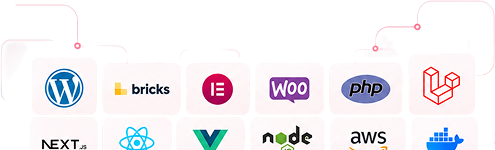
Some projects require WordPress, PHP, custom plugins, Elementor, APIs or complex integrations.
4. Their workload fluctuates
Development demand can increase significantly during certain months and decrease afterward.
5. They don't want to build a larger permanent team
An external development partner can provide additional capacity without equivalent permanent headcount.
How does a white label WordPress partnership work? (infographics )
The basic model is straightforward.
AGENCY
Strategy
Client Relationship
Project Management
↓
DEVELOPMENT PARTNER
WordPress Development
Front-End Development
QA
Maintenance
Technical Support
↓
AGENCY’S CLIENT
Final Website
The client continues to work with the agency.
The development team operates as an extension of the agency.
What can a white label WordPress partner handle?
White Label Development vs Hiring In-House
Neither model is universally right.
The right choice depends on the agency’s project pipeline, internal team and development requirements.
When should an agency consider white label development?
Your developers are consistently overloaded
If developers are regularly working beyond planned capacity, additional resources may be needed.
You are turning away projects
If the agency has demand but cannot accept projects because of development capacity, an external team can provide additional execution capacity.
You need a new technical skill
A project may require a technology your existing team does not regularly work with.
You have seasonal demand
Some agencies experience significant fluctuations in website projects throughout the year.
You want to grow without proportional headcount
A flexible development partner can allow technical capacity to increase with project demand.
The most important part: working behind the scenes
White label development is different from simply outsourcing a website.
The development partner must fit into the agency’s workflow.
That means understanding:
- Project management systems
- Communication channels
- Design files
- Development standards
- QA processes
- Client deadlines
- Approval workflows
The goal is to make the development layer feel like part of the agency.
How should development capacity scale?
A useful model is:
Normal Pipeline
Regular development capacity
↓
Project Surge
Add development hours
↓
Peak Pipeline
Increase resources
↓
Pipeline Normalises
Reduce capacity
This gives agencies a development model that follows demand.
What should agencies look for in a white label WordPress partner?
Technical expertise
Look for experience across WordPress, PHP, JavaScript, front-end development and relevant tools.
Agency experience
A partner that understands agency workflows will usually require less process adjustment.
Confidentiality
Clarify how client information, access credentials and project data are handled.
Communication
Define who communicates with whom and how tasks are assigned.
QA
A clear quality assurance process is essential before work reaches the client.
Scalability
Ask how quickly development capacity can increase when project volumes rise.
Common white label development mistakes
Choosing only on hourly rates
A low development rate does not help if the agency spends more time managing rework.
Not defining responsibilities
Both sides should know who handles strategy, development, QA, communication and deployment.
Poor project documentation
Clear briefs, designs and acceptance criteria reduce unnecessary back-and-forth.
Treating the partner as a temporary vendor
Long-term development knowledge can become a major advantage.
What does a strong white label partnership look like?
The agency should be able to say:
“This is our client.”
And the development team should be able to say:
“This is our responsibility.”
That separation creates a clear operating model.
The agency controls the relationship.
The development partner controls technical execution.
Final Takeaway
White label WordPress development can give agencies access to additional technical capacity without requiring them to build every development capability internally.
It works particularly well when project volumes fluctuate, specialist skills are required or the agency wants to grow its client base without scaling permanent development headcount at the same rate.
The key is finding a partner that can operate within the agency’s processes, maintain quality and scale with the pipeline.
Need a WordPress Development Team Behind Your Agency?
Black Cap IT works as an extended white label WordPress development team for digital agencies.
Frequently Asked Questions
What is white label WordPress development?
It is a model where an external WordPress development team works on an agency’s client projects while the agency retains the client relationship and delivers the work under its own brand.
Can a digital agency outsource WordPress development?
Yes. Agencies can outsource WordPress development to increase technical capacity, access specialist expertise or manage fluctuating project volumes.
Will the client know about the white label development partner?
That depends on the agreement between the agency and development partner. Many white label engagements operate entirely behind the agency’s brand.
How does white label WordPress development work?
The agency manages the client relationship, strategy and project management while the development partner handles technical implementation.
Can white label development scale with project volume?
Yes. Development hours or resources can be increased during high-demand periods and reduced when project volumes normalise.
What services can be white labelled?
Common services include WordPress development, front-end development, custom functionality, Figma to WordPress, maintenance, bug fixing and technical support.